If you stand along the ridge roads of Northeast Tacoma near Browns Point and look west, you can feel it immediately — the wind does not move gently here. It accelerates.
Homes built along the Northeast Tacoma ridge and bluff corridors experience a completely different weather pattern than properties just a few miles inland. While lower Tacoma neighborhoods may deal primarily with groundwater or street-level runoff, ridge-line homes absorb months of direct wind-driven rain, marine air exposure, and pressure cycling across roof systems.
That is why roof leaks in Northeast Tacoma often appear in March — not January.
The damage builds all winter. The leak reveals itself when the temperature shifts.
This delayed pattern is something we routinely address while performing water damage restoration throughout Tacoma’s elevated neighborhoods.
What Makes Northeast Tacoma Structurally Different
Unlike flatter areas of Federal Way or the valley floor in Fife, Northeast Tacoma sits on elevated ridges with direct exposure to Puget Sound weather patterns. Marine air moves horizontally across roofing systems rather than falling vertically like standard rainfall.
That matters.
Wind-driven rain penetrates flashing seams and shingle transitions at angles traditional gravity-based water shedding systems were not primarily designed to resist. Over time, flashing fatigues. Fasteners loosen microscopically. Sealants develop hairline fractures.
Salt carried in marine air accelerates corrosion, especially near Browns Point and properties facing Commencement Bay.
This corrosion is subtle during winter. It becomes visible when spring rain begins penetrating weakened areas.
Why the Leak Shows Up After Winter Ends
During freezing periods, trapped moisture beneath shingles can remain immobilized. Once temperatures rise in late February and early March, that moisture melts and begins migrating downward.
Instead of freezing again, it now flows.
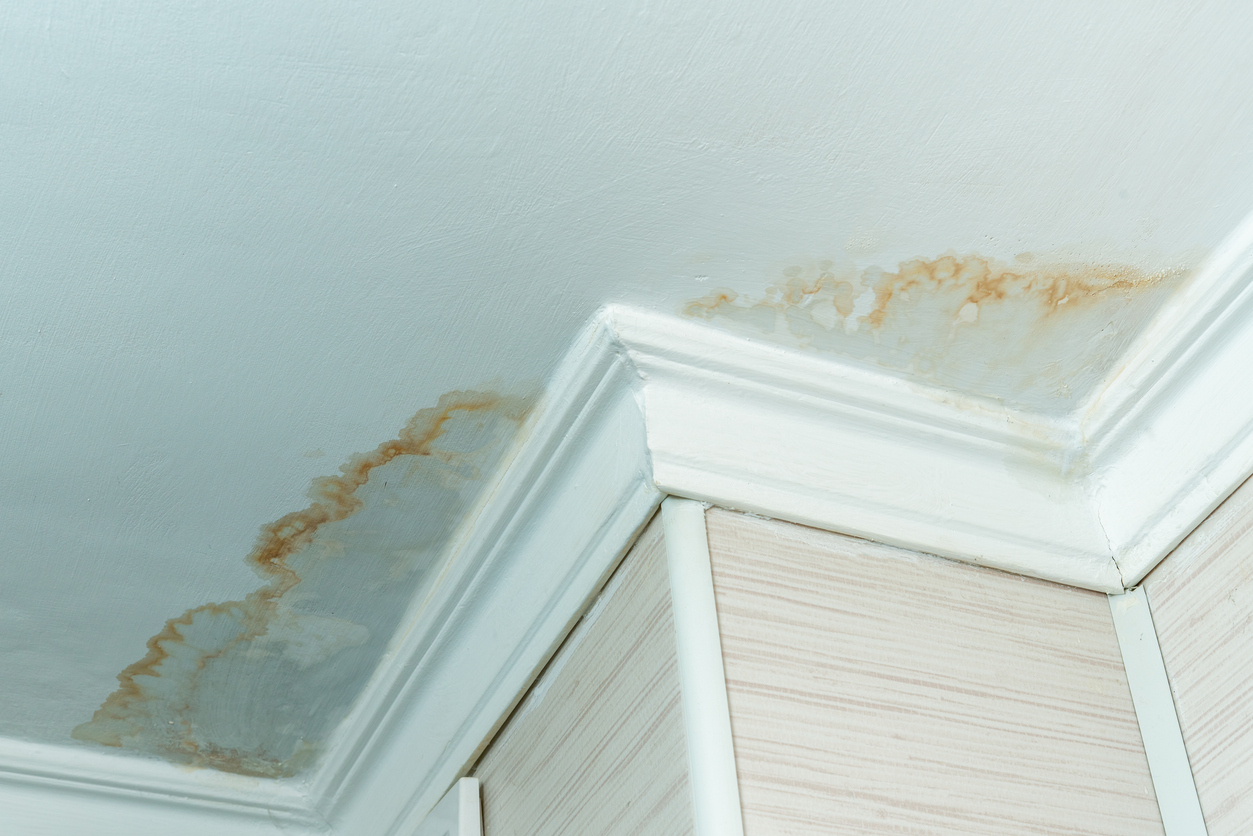
That is why homeowners often report ceiling staining in March even though the most intense storms occurred earlier in the season.
The leak did not start in March.
It was activated in March.
This delayed exposure effect is particularly common in older custom bluff builds from the 1970s and 1980s, where flashing systems differ from modern installation standards.
Ridge-Line Wind Shear and Roof Fatigue
Homes closer to the ridge crest experience stronger wind shear than homes just blocks inland. The difference may seem minor geographically, but structurally it compounds over time.
On ridge homes, we frequently observe:
- Lifted shingle edges
- Flashing separation near chimneys
- Compromised vent boots
- Microfractures along roof valleys
In contrast, homes further inland toward Northshore or lower Tacoma may experience less wind pressure but more standing water issues.
Same city. Different stress pattern.
How Water Travels After Penetration
Once wind-driven rain penetrates a compromised flashing seam, it rarely drops straight down. Instead, it follows rafters and insulation paths.
By the time staining appears on drywall, moisture may have spread several feet from the original entry point.
Attic insulation absorbs and retains water. Framing remains damp long enough to elevate mold risk, sometimes requiring professional mold removal and testing in addition to structural drying.
The longer spring rains continue, the farther that moisture migrates.
Marine Exposure vs Inland Tacoma
Tacoma neighborhoods differ dramatically in moisture behavior.
- Bluff-facing Northeast Tacoma: wind-driven intrusion and corrosion
- Lower North End: older fill soil and settlement cracks
- Industrial valley areas: groundwater and slab stress
In Northeast Tacoma specifically, the roof is often the primary vulnerability — not the foundation.
Understanding that distinction shapes how restoration is approached.
Why Surface Roof Repairs Aren’t Enough
Homeowners often patch shingles or reseal flashing once a leak is identified. That stops future water intrusion but does nothing to remove moisture already inside structural cavities.
Without interior drying and moisture verification, damp insulation and framing remain at risk for long-term deterioration.
Professional restoration includes:
- Thermal imaging to track moisture spread
- Controlled attic drying
- Removal of saturated insulation
- Moisture-level verification before rebuild
This ensures that what started as a roof leak does not become a larger structural issue.
In prolonged exposure cases, electrical components within attic spaces may also be affected, increasing risk for conditions that could eventually contribute to fire and smoke damage if left unchecked.
The Spring Timing Window in Tacoma
March is the intervention point.
By April, additional storm cycles compound the damage. By May, rising temperatures accelerate microbial growth. What was once a localized attic issue becomes a ceiling, wall, and air quality concern.
Acting during early spring limits spread and reduces reconstruction scope.
When Northeast Tacoma Homeowners Should Investigate
If you live in Northeast Tacoma near:
- Browns Point
- The ridge corridor
- Bluff-facing developments
- Elevated custom-home zones
And you notice:
- Ceiling staining
- Attic dampness
- Persistent musty odor
- Paint bubbling along upper walls
It is often delayed winter roof fatigue combined with spring activation.
911 Restoration of Seattle provides residential and commercial restoration services throughout Tacoma and surrounding communities. Ridge-line homes require a different restoration strategy than valley or plateau builds — and early spring is when that difference becomes most visible.