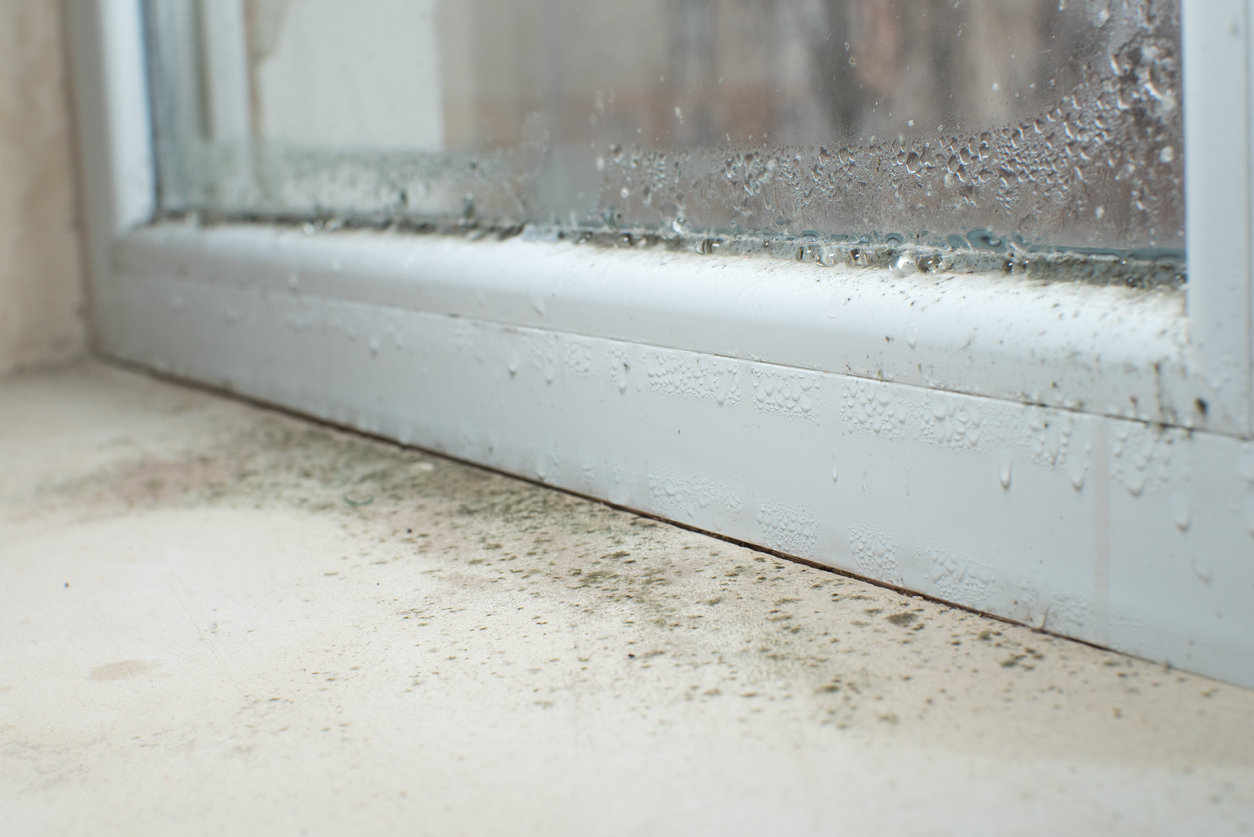
If you compare two homes in Federal Way in early March — one in Lakota and one in Marine Hills — the mold risk profile is not the same.
Marine Hills sits along elevated bluff edges overlooking Puget Sound. It is exposed to marine air, shaded by mature tree canopy, and often built on sloped lots with partial daylight basements. Those conditions create a microclimate that holds moisture longer than many inland Federal Way neighborhoods.
That is why mold discovery tends to spike in Marine Hills before it does in flatter subdivisions like Twin Lakes or Lakota.
This is not coincidence. It is environmental behavior.
And it is something we see repeatedly while performing mold removal and testing throughout Federal Way’s bluff communities.
The Marine Layer Effect in Federal Way
Homes in Marine Hills are exposed to consistent moisture cycles from Puget Sound. Even when it is not raining, marine air carries humidity inland. Overnight condensation forms on exterior materials. Shaded lots with dense evergreen coverage slow evaporation during the day.
While Lakota properties often benefit from slightly more open exposure and better sun penetration, Marine Hills homes remain damp longer after storms.
That lingering surface dampness compounds winter moisture accumulation inside wall cavities and crawl spaces.
By March, when temperatures begin to rise slightly, that retained moisture activates dormant mold growth.
Bluff Topography and Ventilation Challenges
Many Marine Hills homes are built along slopes with partial daylight basements or split-level designs. These layouts often create airflow pockets where ventilation is less effective.
Crawl spaces beneath sloped homes may have limited cross-ventilation. Attics on bluff-facing sides absorb wind-driven moisture but do not always dry quickly.
During winter, moisture builds gradually inside insulation and framing cavities. When spring arrives, warmer air increases microbial activity.
Unlike dramatic water intrusion events that require immediate water damage restoration, mold in Marine Hills often results from long-term humidity retention.
Why Lakota and Inland Federal Way Behave Differently
Lakota homes, particularly those slightly elevated and further inland, experience different exposure patterns. While still susceptible to winter moisture, they are less influenced by marine humidity and bluff-driven wind cycles.
Twin Lakes homes struggle with groundwater pressure from below. Marine Hills homes struggle with atmospheric moisture from above and around.
Same city. Different stress source.
That difference explains why mold complaints often surface earlier in Marine Hills as spring begins.
Mature Tree Canopy and Shaded Lot Retention
Marine Hills is known for mature landscaping and established tree canopy. While beautiful, this also reduces sunlight penetration.
Less sunlight means slower drying of:
- Roof surfaces
- Siding seams
- Deck tie-ins
- Window trim
Persistent exterior dampness can migrate inward over time through minor seal failures or aging siding joints.
By March, when homeowners begin spring cleaning or opening windows, musty odors become noticeable — often for the first time.
The Crawl Space Amplifier
In many Marine Hills homes, crawl spaces become humidity amplifiers.
Winter rainfall saturates soil around foundation walls. Bluff slopes can channel runoff toward lower portions of the home if grading shifts over time. When vapor barriers degrade, exposed soil releases moisture upward continuously.
That moisture rises into subfloor cavities, increasing humidity inside living spaces.
Left unaddressed, this environment supports microbial growth that spreads through air circulation systems.
In severe cases, prolonged saturation around lower foundations may contribute to plumbing stress or conditions requiring sewage backup cleanup during heavy spring storms.
Why Mold Discovery Peaks in March
During winter, homes remain closed. HVAC systems circulate air internally. Mold growth may occur quietly behind walls without obvious symptoms.
In March, homeowners begin:
- Opening windows
- Running fans
- Cleaning storage areas
- Inspecting crawl spaces
Air movement redistributes spores, and warmer temperatures accelerate colony expansion.
What felt like mild winter dampness becomes noticeable mold presence.
This is the seasonal tipping point in Federal Way’s bluff neighborhoods.
Restoration Strategy in Marine Hills
Restoration in Marine Hills must account for:
- Microclimate humidity retention
- Bluff drainage patterns
- Crawl space airflow
- Attic ventilation performance
- Exterior siding seam integrity
Simply cleaning visible mold is not sufficient. Moisture source identification and structural drying are critical.
Thermal imaging and moisture mapping often reveal elevated readings in exterior-facing wall cavities where wind-driven moisture accumulated throughout winter.
In some cases, electrical components exposed to prolonged humidity may also require evaluation to prevent escalation into issues associated with fire and smoke damage.
When Marine Hills Homeowners Should Act
If you live in Marine Hills in Federal Way and notice:
- Persistent musty odor
- Increased allergy symptoms
- Darkening drywall near exterior walls
- Elevated indoor humidity
- Crawl space dampness
Early spring is not the time to wait.
911 Restoration of Seattle provides residential and commercial restoration services throughout Federal Way, including Marine Hills and surrounding bluff neighborhoods. Mold behavior here is microclimate-driven — and understanding that terrain difference allows restoration to be precise rather than reactive.