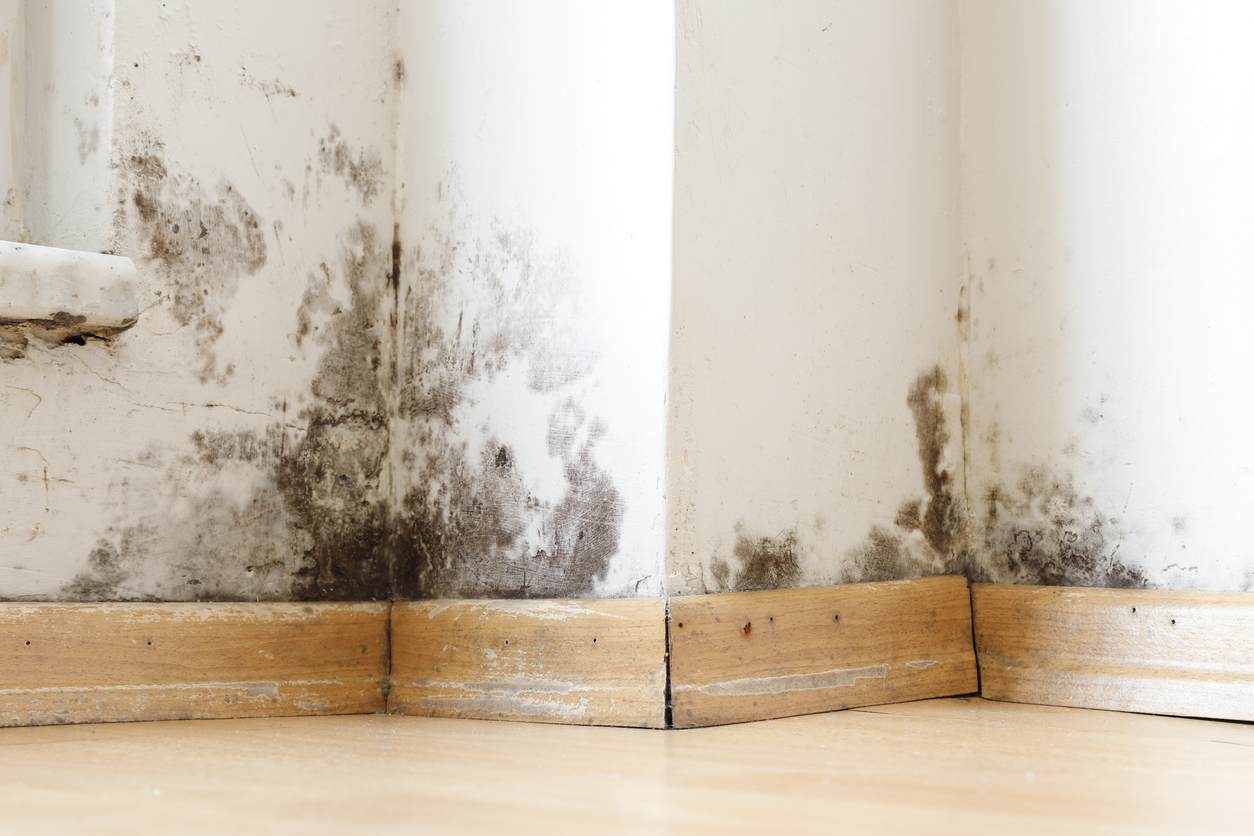
You had water damage.
It was cleaned up.
Everything looked dry.
But the smell never left.
Or worse — it went away for a few days… and then came back.
If you’re in Tacoma WA — especially in areas like Northeast Tacoma, Browns Point, or older North End homes — this is one of the most common follow-up problems we see.
And it usually means one thing:
The job wasn’t finished.

That Smell Isn’t Just “Leftover Moisture”
A musty smell after water damage is not normal.
It’s a signal.
Most often, it means:
- Moisture is still trapped somewhere
- Materials didn’t fully dry
- Mold has started forming
Even if everything looks clean, the structure may still be holding water.
And in Tacoma’s climate — especially near marine areas — moisture lingers longer than homeowners expect.

Where That Smell Is Actually Coming From
After water damage, odor usually comes from hidden areas like:
- Inside wall cavities
- Under flooring
- Crawl spaces
- Attic insulation
In many Tacoma homes, especially split-level or older builds, airflow between these areas carries odor into living spaces.
So even if the original damage was in one room, the smell spreads.

Why It Didn’t Go Away After “Drying”
This is where most restoration jobs fall short.
Homeowners are told the space is dry because:
- The surface feels dry
- Fans were used
- The visible water is gone
But proper water damage restoration in Tacoma requires:
- Measuring moisture inside materials
- Drying below the surface
- Verifying that drying is complete
If those steps weren’t done, moisture stays behind.
And moisture always leads to odor.

The Tacoma Climate Factor
Tacoma homes behave differently than inland homes.
In areas like:
Browns Point / Northeast Tacoma:
- Higher humidity slows drying
North End:
- Older construction absorbs moisture more easily
Near Fife / low-lying areas:
- Ground moisture can linger longer
These conditions mean that incomplete drying leads to faster odor return.
When It Becomes a Mold Problem
If the smell has been present for more than a few days, mold is likely involved.
Mold doesn’t always show up visually right away.
It can grow:
- Behind drywall
- Under flooring
- Inside insulation
This is when homeowners start searching:
“mold remediation near me”
Because at that point, cleaning alone won’t fix the problem.
What Proper Restoration Should Have Done
A complete job should include:
- Moisture mapping to find hidden water
- Removal of materials that couldn’t be saved
- Industrial drying equipment
- Daily monitoring
- Final moisture verification
If any of these steps were skipped, the smell returning is expected.
Not unusual.
Why the Smell Gets Worse Over Time
When moisture remains:
- Mold spreads
- Odor intensifies
- Air quality declines
What starts as a faint smell can become:
- Whole-house odor
- Persistent humidity
- Health complaints indoors
And the longer it goes untreated, the more extensive the restoration becomes.
What Needs to Happen Now
If the smell hasn’t gone away, the solution isn’t masking it.
It’s identifying the source.
This usually requires:
- Re-inspection of affected areas
- Opening walls or flooring if necessary
- Full structural drying
- Mold remediation if present
This is where 24-hour emergency restoration often gets called again — after an incomplete job.
Secondary Risks Most Homeowners Miss
That lingering moisture doesn’t just affect odor.
It can impact:
- Electrical systems
- HVAC airflow
- Structural materials
Over time, this can lead to conditions associated with fire and smoke damage if wiring is affected.
In more severe cases, persistent moisture environments may also contribute to issues requiring sewage backup cleanup.
When Tacoma Homeowners Should Call Again
If you’re noticing:
- Musty smell that won’t go away
- Odor returning after cleanup
- Increased humidity indoors
- Signs of recurring moisture
You’re not dealing with a finished job.
You’re dealing with an incomplete one.
911 Restoration of Seattle provides water damage restoration in Tacoma, including flood cleanup services, mold remediation near me, and full 24-hour emergency restoration.
If the smell is still there, the problem is still there.