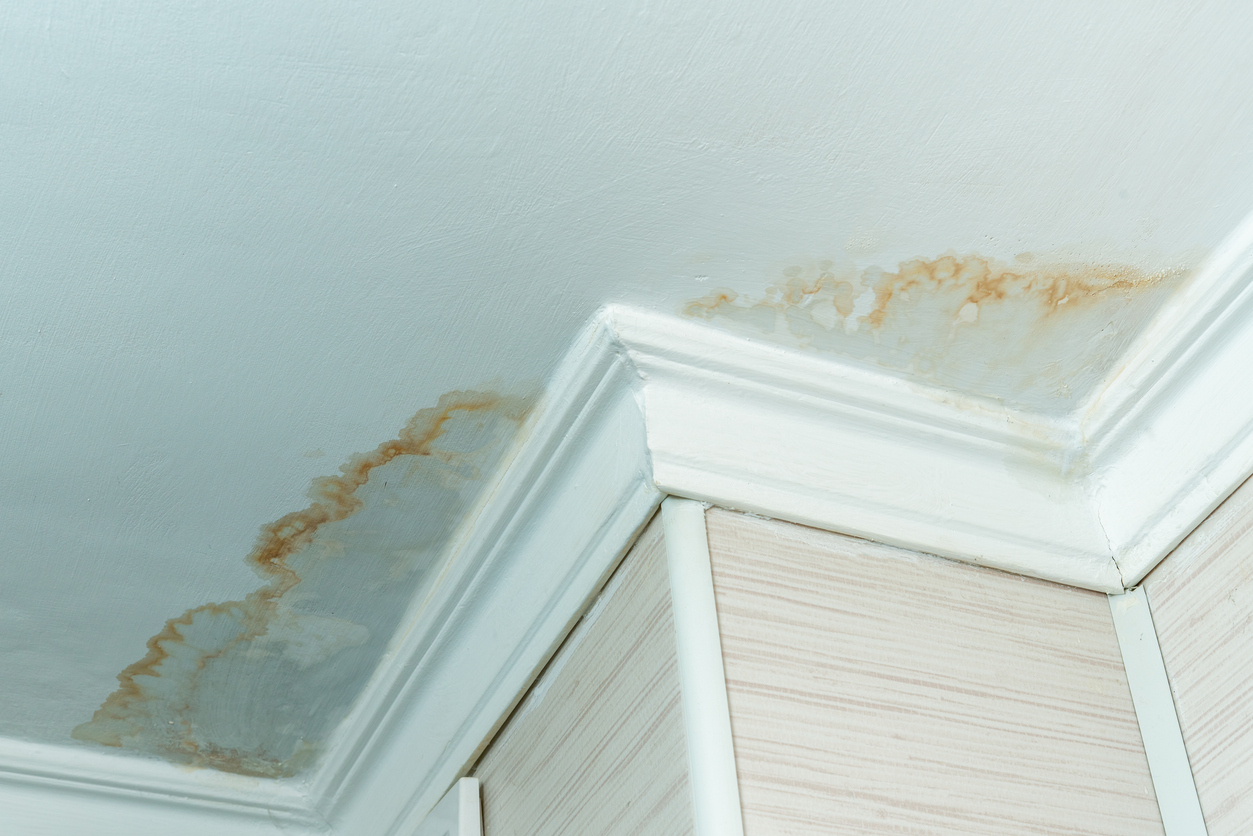
You fixed the leak.
Or at least you thought you did.
The roofer came out.
The area was patched.
The ceiling was repaired.
And now — after the next rain — it’s leaking again.
If you’re in Northeast Tacoma, Browns Point, or Dash Point, this is one of the most common repeat problems we see.
And it usually comes down to this:
The first repair didn’t address where the water actually entered.

Why Roof Leaks in Northeast Tacoma Are Different
In most areas, rain falls downward.
In Northeast Tacoma, especially along ridge and bluff areas, rain often moves sideways due to wind exposure from Puget Sound.
That means water doesn’t just hit your roof — it gets pushed into:
- Flashing seams
- Roof valleys
- Vent penetrations
- Chimney joints
So while a repair might cover the visible leak point, it may miss where the water is actually entering.
The “Same Leak, Different Spot” Problem
Here’s what homeowners experience:
- Leak appears → gets patched
- Water stops temporarily
- Next storm → leak returns
But often:
- The entry point was never fixed
- Water simply found another path
- Moisture continued spreading under the surface
This is why it feels like the same leak — even when the repair was done.

What Was Likely Missed the First Time
1. The Actual Entry Point
Water rarely enters directly above where you see damage.
It travels.
In Northeast Tacoma homes, water can move several feet along:
- Roof decking
- Rafters
- Insulation
So repairing the visible damage area doesn’t solve the problem.

2. Structural Moisture Was Ignored
Even if the roof was fixed, what about the damage inside?
If no water damage restoration in Tacoma was done:
- Insulation may still be wet
- Wood framing may still hold moisture
- Drywall may still be compromised
That’s why leaks seem to “come back” — moisture was never removed.
3. Wind Exposure Wasn’t Considered
Many repairs don’t account for:
- Bluff exposure
- Marine wind direction
- Repeated storm patterns
In areas like Dash Point and Browns Point, this matters.
A standard patch may fail again under the same conditions.
Why You’re Seeing It Again Now
Spring storms in Tacoma aren’t always heavy — but they hit weakened areas.
After winter:
- Materials expand and contract
- Sealants weaken
- Small gaps reopen
So even if the leak seemed fixed earlier, the structure is still vulnerable.
That’s when the problem returns.
What Happens If You Keep Patching It
Repeated patching leads to:
- Larger affected areas
- Hidden moisture spreading
- Increased repair cost
Eventually, what started as a small leak becomes:
- Ceiling damage
- Insulation removal
- Structural drying
- Possible mold remediation
This is when homeowners start searching:
“water damage restoration Tacoma”
“mold remediation near me”
Because the problem has escalated beyond roofing.
When It Becomes a Mold Issue
If water has been entering repeatedly, even in small amounts, mold can develop in:
- Attic insulation
- Ceiling cavities
- Wall intersections
This is especially common in Northeast Tacoma due to:
- Higher humidity
- Slower drying conditions
At this point, fixing the roof alone is not enough.
What Proper Repair + Restoration Should Include
To fully fix a recurring roof leak, you need both:
Roofing Repair
- Identify true entry point
- Address flashing and seams
- Consider wind exposure
Restoration
- Inspect for hidden moisture
- Remove wet insulation
- Dry structural materials
- Verify moisture levels
This is what prevents the leak from returning.
Secondary Damage You Might Not See Yet
Repeated roof leaks can affect:
- Electrical wiring in ceilings
- Light fixtures
- HVAC ductwork
Moisture exposure over time increases risks associated with fire and smoke damage if systems degrade.
In some cases, prolonged moisture can also contribute to issues requiring sewage backup cleanup due to broader system stress.
Why This Costs More the Second Time
When a leak comes back:
- Damage area is larger
- More materials are affected
- Drying takes longer
The second repair is almost always more expensive than doing it correctly the first time.
When to Call Now
If your roof leak in Northeast Tacoma:
- Came back after being fixed
- Appears in the same or nearby area
- Is causing repeated ceiling damage
- Comes with a musty smell
You are no longer dealing with just a roofing issue.
911 Restoration of Seattle provides water damage restoration in Tacoma, including flood cleanup services, mold remediation near me, and full 24-hour emergency restoration.
If the leak came back, the original problem was never fully solved.