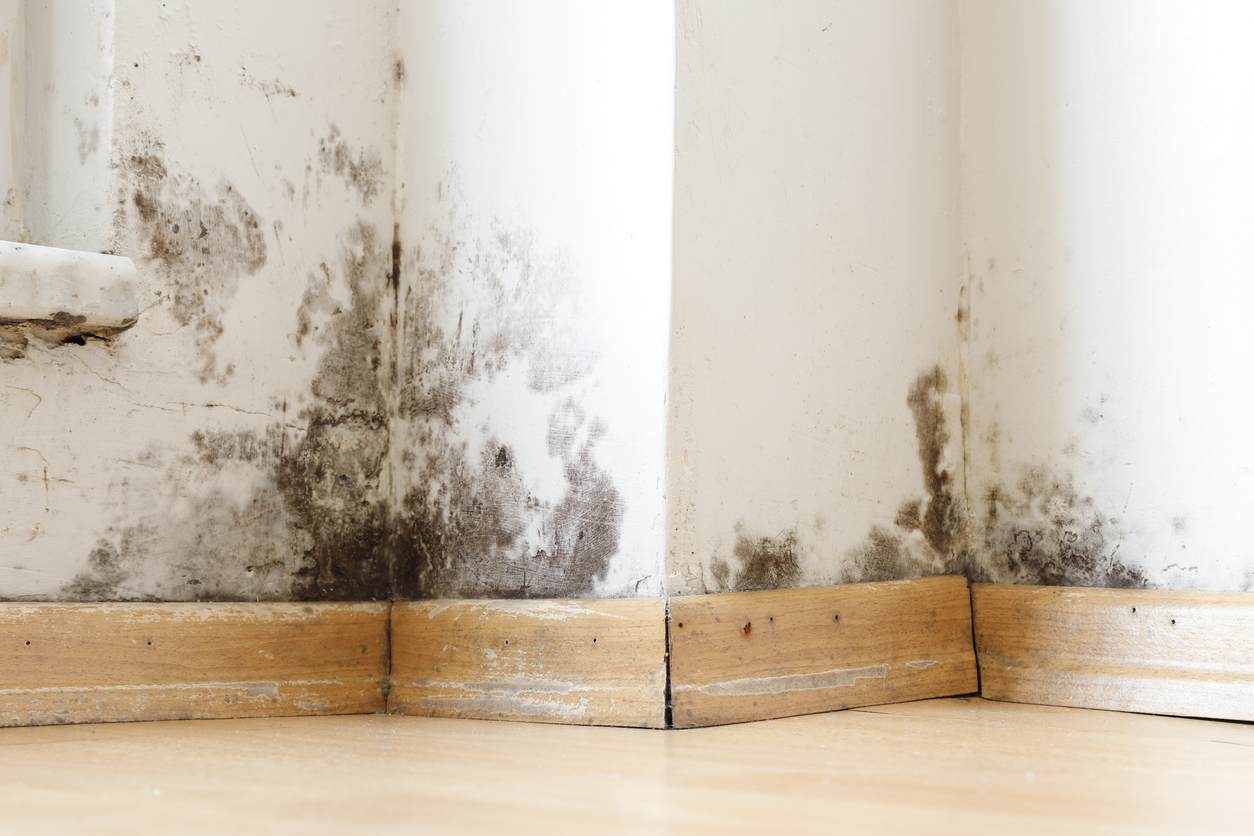
At first, it’s small.
A faint smell.
A tiny dark spot.
Maybe a little discoloration near a baseboard.
Easy to ignore.
But then it spreads.
The smell gets stronger.
The spot gets bigger.
And suddenly you’re searching:
“mold remediation near me”
If you’re in Federal Way WA — especially in neighborhoods like Twin Lakes, Lakota, or Marine Hills — this is often the moment when mold has already moved beyond the surface.
And by the time it reaches your walls, it’s no longer a minor issue.

The Biggest Misconception About Mold
Most homeowners think mold stays where they see it.
It doesn’t.
What you see is usually just a fraction of what’s actually there.
Mold spreads through:
- Wall cavities
- Insulation
- Subfloors
- Airflow pathways
So when it becomes visible, it’s often already established behind the surface.
How Mold Gets Inside Walls
Mold doesn’t randomly appear inside walls.
It follows moisture.
In Federal Way homes, this usually starts with:
- Past water damage that wasn’t fully dried
- Small leaks behind drywall
- Crawl space moisture rising upward
- Condensation in poorly ventilated areas
Once moisture enters a wall and stays there, mold has everything it needs to grow.
Early Signs the Problem Is Spreading
Before mold becomes obvious, there are warning signs.
Watch for:
- A musty smell that won’t go away
- Odor that gets stronger in certain rooms
- Paint bubbling or peeling
- Slight discoloration that keeps expanding
These are signs mold is not just present — it’s growing.
The “It’s Getting Worse” Stage
This is where most homeowners finally act.
The signs become harder to ignore:
- Smell spreading through the house
- Multiple areas affected
- Increased humidity indoors
- Allergy-like symptoms
At this point, the issue is no longer surface-level.
It’s structural.
And it often requires full water damage restoration in Federal Way along with mold remediation.
Why Federal Way Homes Are More Susceptible
Certain local conditions accelerate mold spread:
Twin Lakes:
- Ground moisture feeds crawl space humidity
Marine Hills:
- Higher air moisture slows drying
Lakota / West Campus:
- Older materials absorb moisture easily
These factors allow mold to spread faster once it starts.
What Happens If You Wait
Mold doesn’t stabilize on its own.
It expands.
Over time, it can:
- Spread through entire wall sections
- Move into adjacent rooms
- Affect indoor air quality
- Increase the amount of material that must be removed
What could have been a contained issue becomes a much larger remediation project.
Why Surface Cleaning Doesn’t Work
Many homeowners try to wipe or treat visible mold.
That only addresses what you can see.
It does not:
- Remove mold inside walls
- Stop moisture inside materials
- Prevent regrowth
This is why mold returns — and why it continues spreading.
What Proper Mold Remediation Includes
When you call for mold remediation near me, a complete process should include:
- Containment to prevent spread
- Air filtration
- Removal of contaminated materials
- Structural drying
- Moisture source correction
If water damage caused the mold, flood cleanup services may also be needed to fully resolve the issue.
Secondary Damage Most Homeowners Miss
As mold spreads, it often indicates ongoing moisture.
That moisture can affect:
- Electrical wiring
- HVAC systems
- Structural framing
Over time, this increases risks associated with fire and smoke damage if systems degrade.
In more severe moisture conditions, homes may also develop issues requiring sewage backup cleanup.
Why Acting Now Saves Money
Early-stage mold:
- Limited removal
- Faster remediation
- Lower cost
Advanced mold:
- Larger demolition
- Longer drying time
- Higher restoration cost
The difference is timing.
When to Call Immediately
If you’re noticing:
- Mold that is spreading
- A smell that’s getting stronger
- Multiple areas affected
- Signs of moisture inside walls
You are past the point of simple cleanup.
911 Restoration of Seattle provides mold remediation near me, along with water damage restoration in Federal Way, flood cleanup services, and full 24-hour emergency restoration.
If mold is spreading, the damage is still active.