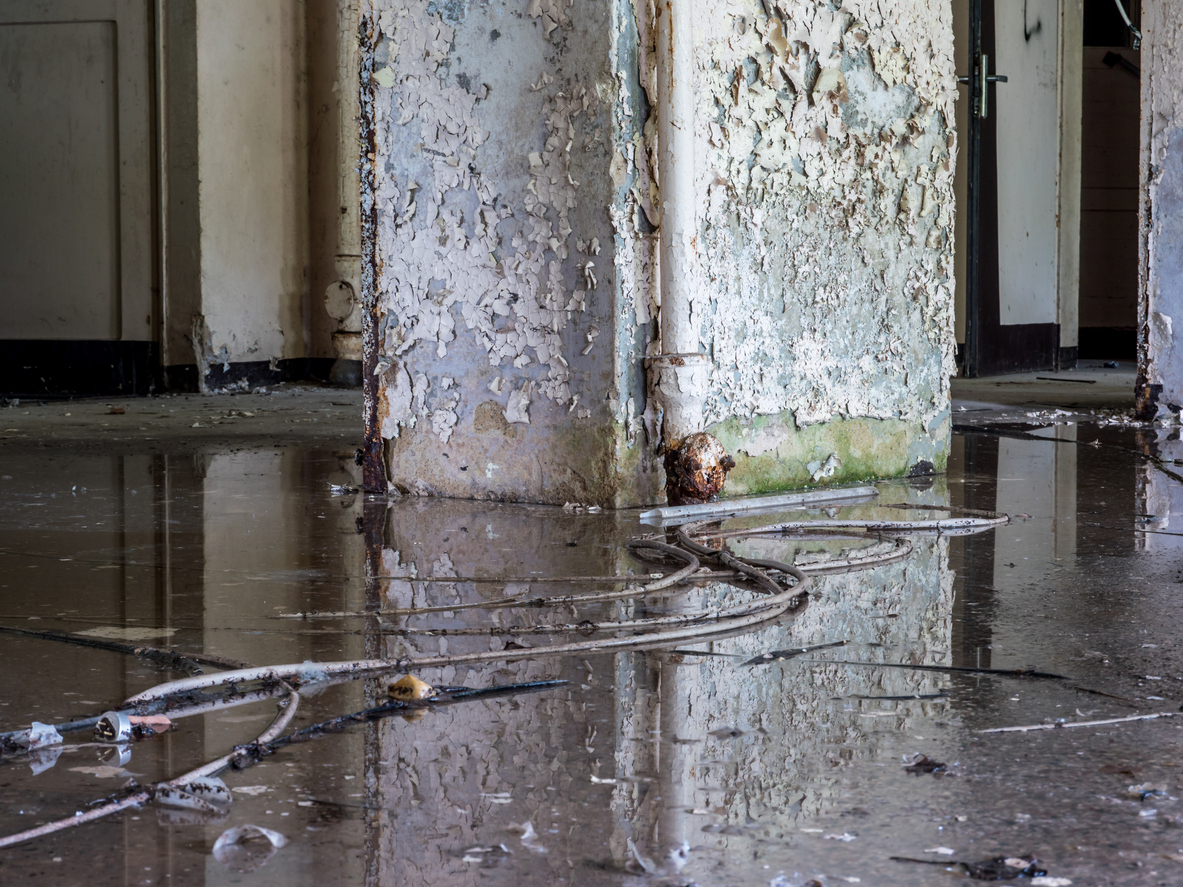
When water damage happens in a single-family home in Federal Way WA, the impact is usually contained to one structure.
When it happens in a multi-unit building — an apartment complex in West Campus, a condo building near The Commons, or a townhome cluster in Lakota — the situation escalates quickly.
Because in shared-wall construction, water does not respect unit boundaries.
By the time one tenant notices ceiling staining or damp carpet, moisture may already be inside two or three adjacent units.
This isn’t about preventing the leak.
This is about restoring multi-unit buildings after spring water intrusion has already begun spreading.
That’s when immediate, coordinated water damage restoration becomes critical.

Why Multi-Unit Buildings in Federal Way Behave Differently
Federal Way saw significant apartment and condo development in the 1980s through early 2000s. Many complexes near South 320th Street, West Campus Drive, and SW Dash Point Road share common characteristics:
- Shared roof systems
- Shared attic spaces
- Shared wall cavities
- Centralized HVAC systems
When spring storms exploit a roof seam or when upper-level plumbing fails, water does not simply travel down one wall.
It spreads horizontally through shared framing cavities.
A small roof intrusion above Unit 304 can result in:
- Ceiling damage in Unit 204
- Wall saturation in Unit 303
- Mold development inside shared insulation spaces
The restoration footprint becomes multi-unit almost immediately.

The March Moisture Multiplier
By March, Federal Way buildings have endured months of rain. Roof membranes may already be stressed. Flashing may already be fatigued.
When a late-season storm hits, even minor weaknesses can allow water inside.
In multi-unit buildings, insulation often runs continuously between units. Moisture absorbed in one section migrates through framing channels.
Tenants might report:
- Ceiling bubbling
- Wall staining
- Soft drywall seams
- Musty odors in hallways
By the time management investigates, moisture may have already spread across multiple structural bays.

What Restoration Looks Like in a Shared-Wall Structure
Restoration in an apartment or condo building is not the same as drying a single-family home.
The process typically includes:
- Multi-unit moisture mapping
- Coordinated access between affected units
- Containment zones to prevent cross-contamination
- Removal of shared insulation
- Industrial-scale dehumidification across connected spaces
Because moisture moves laterally, drying must address the entire affected cavity — not just the visibly damaged unit.
If water remains in shared insulation for even a short time, professional mold removal and testing may become necessary to prevent building-wide contamination.

West Campus and Lakota Complexes: Shared Infrastructure Risk
In West Campus developments, many apartment buildings share similar construction timelines. Aging roof membranes and drainage systems often reach vulnerability at the same time.
In Lakota townhome clusters, shared walls and connected attics create ideal pathways for moisture migration.
When a roof drain clogs or flashing fails during spring storms, water spreads through framing faster than property managers expect.
By the time visible staining appears in the second unit, the first cavity may already be saturated.

Liability and Tenant Impact After Water Intrusion
Once water enters a multi-unit structure, restoration must move quickly to reduce:
- Tenant displacement
- Property damage escalation
- Health complaints
- Liability exposure
Wet insulation inside shared walls can affect indoor air quality across units. Moisture near electrical runs increases risk factors associated with fire and smoke damage if systems degrade.
If spring storms overwhelm exterior drains and infiltration reaches lower-level plumbing systems, buildings may also face situations requiring sewage backup cleanup.
In multi-unit properties, the impact multiplies quickly.
Why March Is a Critical Response Window
By March, moisture levels inside building assemblies are often already elevated from winter humidity.
When new water enters, saturation happens faster.
Waiting even a few days allows:
- Greater insulation contamination
- Broader mold spread
- Increased demolition scope
- Higher tenant disruption
Fast intervention limits both structural damage and liability exposure.

When Federal Way Property Managers Should Call
If you manage or own an apartment or condo building in Federal Way WA and notice:
- Multiple units reporting ceiling stains
- Hallway odors
- Roof leaks during spring storms
- Moisture spreading beyond a single apartment
Immediate building-wide evaluation is necessary.
911 Restoration of Seattle provides residential and commercial restoration services throughout Federal Way, including multi-unit apartment and condominium properties. Spring water intrusion in shared-wall construction requires coordinated drying, containment, and structural stabilization before reconstruction begins.