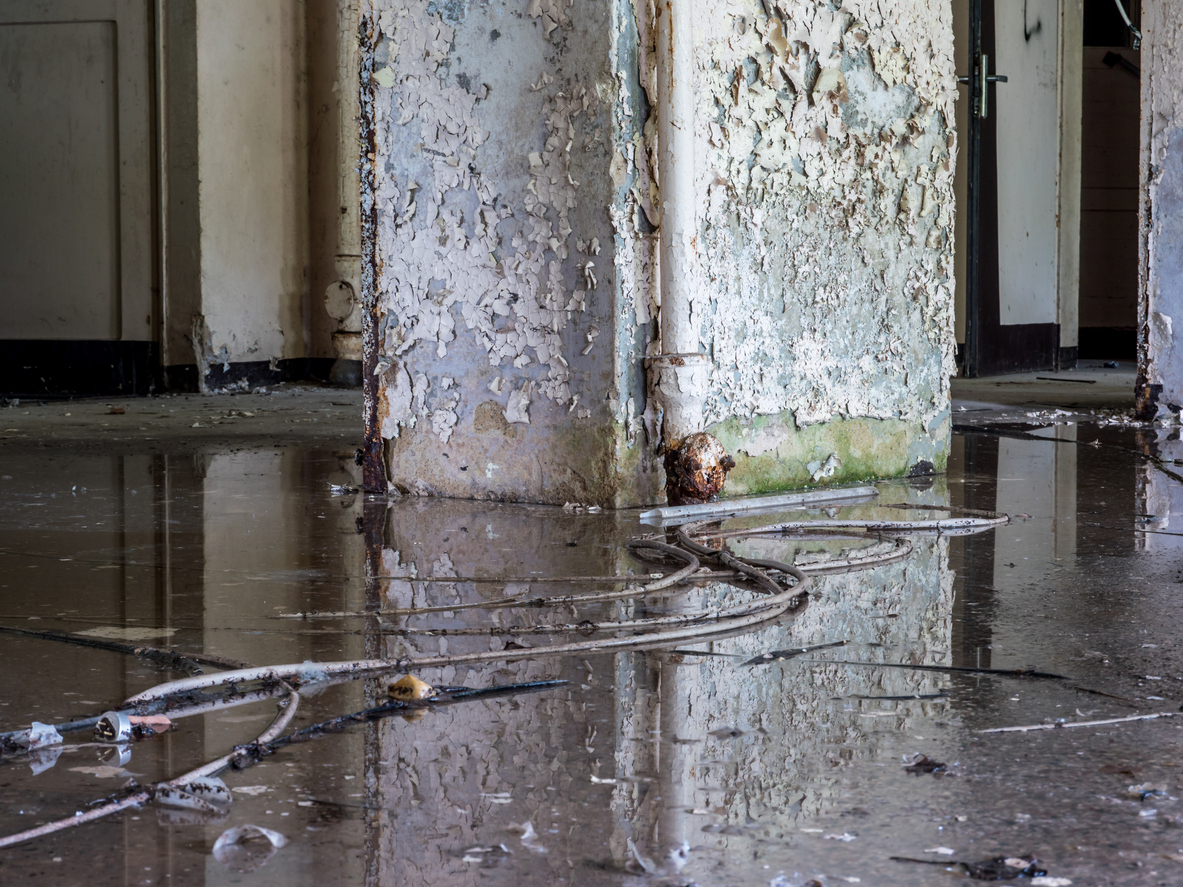
One of the biggest misconceptions homeowners have about water damage is:
“If the leak was upstairs, the damage is upstairs.”
But in many Federal Way homes, water rarely stays on one level.
It moves downward.
Sideways.
Behind walls.
Under flooring.
And by the time homeowners realize how far it spread, multiple parts of the home may already be affected.
Especially in neighborhoods like Twin Lakes, Marine Hills, and West Campus, multi-level water damage is more common than most homeowners realize.

Why Water Spreads Further Than Expected
Water follows the path of least resistance.
After an upstairs leak or overflow, moisture can move through:
- subfloors
- ceiling cavities
- wall framing
- insulation systems
That means a single incident upstairs may eventually affect:
- ceilings below
- lower-level walls
- flooring on multiple stories
- crawl spaces
This is why professional flood cleanup services always involve checking beyond the immediately visible damage.
The Most Common Multi-Level Water Damage Scenarios
In Federal Way homes, we commonly see:
- upstairs bathroom overflows
- appliance leaks on upper floors
- roof leaks spreading downward
- burst pipes inside wall cavities
At first, the damage may appear isolated.
Then homeowners notice:
- ceiling stains downstairs
- soft flooring below
- odor spreading through multiple rooms
Because hidden moisture has already traveled throughout the structure.
Why Federal Way Homes Are Especially Vulnerable
Certain local conditions increase the risk of widespread moisture spread.
Twin Lakes
Ground moisture and crawl space humidity slow structural drying once water reaches lower levels.
Marine Hills
Marine air keeps interior cavities damp longer after intrusion.
Older West Campus Homes
Older floor systems and framing layouts allow water to travel extensively before detection.
These factors make hidden multi-level moisture especially difficult to fully dry without professional restoration.
Why Ceiling Stains Usually Mean More Than Ceiling Damage
One of the biggest mistakes homeowners make is focusing only on the visible ceiling stain.
But ceiling staining often means:
- subfloor saturation above
- wet insulation between levels
- framing exposure inside floor cavities
In many cases, the visible stain is only the final stage of the water’s path through the structure.

The “We Didn’t Realize It Spread Downstairs” Problem
This is extremely common.
Homeowners address:
- the leak source
- the upstairs flooring
- visible damage
But no inspection is done below.
Weeks later:
- downstairs drywall softens
- odor develops
- flooring begins shifting
- moisture reappears
Because the lower level was never fully dried.

Why Multi-Level Water Damage Gets Expensive Fast
When water affects multiple stories:
- more materials become involved
- drying becomes more complex
- demolition zones expand
Restoration may require:
- ceiling removal
- insulation replacement
- flooring tear-outs
- wall cavity drying
The larger the spread, the more structural access is required.
That’s why delayed mitigation often turns moderate damage into major reconstruction.

Why Surface Drying Is Not Enough
Many homeowners assume:
“If the floor feels dry, everything underneath must be dry too.”
But hidden moisture often remains inside:
- ceiling cavities
- floor assemblies
- lower wall sections
- insulation systems
Professional water damage restoration in Federal Way requires:
- thermal imaging
- moisture mapping
- structural inspection
- drying verification
Without these steps, moisture may remain active between levels long after visible water disappears.

Why Water Damage Often Reappears Later
Incomplete multi-level drying frequently leads to:
- recurring stains
- soft drywall
- odor returning
- flooring movement
Because once hidden cavities stay wet:
- deterioration continues
- trapped humidity spreads
- structural materials weaken
This is one of the most common reasons homeowners end up paying for repeat restoration work.
Secondary Risks Homeowners Often Miss
Multi-level water intrusion may also affect:
- electrical systems between floors
- HVAC ducting
- recessed lighting
- structural connectors
Over time, hidden moisture exposure can increase risks associated with fire and smoke damage if electrical systems deteriorate.
Severe water events may also require sewage backup cleanup if contaminated water becomes involved.
Why Fast Mitigation Limits Structural Spread
The earlier restoration begins:
- the more materials can potentially be saved
- the smaller the demolition area becomes
- the less reconstruction is required
That’s why 24-hour emergency restoration is critical after upper-floor water damage.
The goal is to stop the spread before it affects the entire structure.

When Federal Way Homeowners Should Call Immediately
If your home has:
- water leaking between floors
- ceiling stains below bathrooms or kitchens
- soft drywall downstairs
- odor spreading to multiple rooms
- recurring moisture after an upstairs leak
the damage may already involve multiple structural levels.
911 Restoration of Seattle provides water damage restoration in Federal Way, including structural drying, flood cleanup services, and full 24-hour emergency restoration for multi-level residential water damage.
When water spreads between floors, the visible damage is usually only part of the problem.