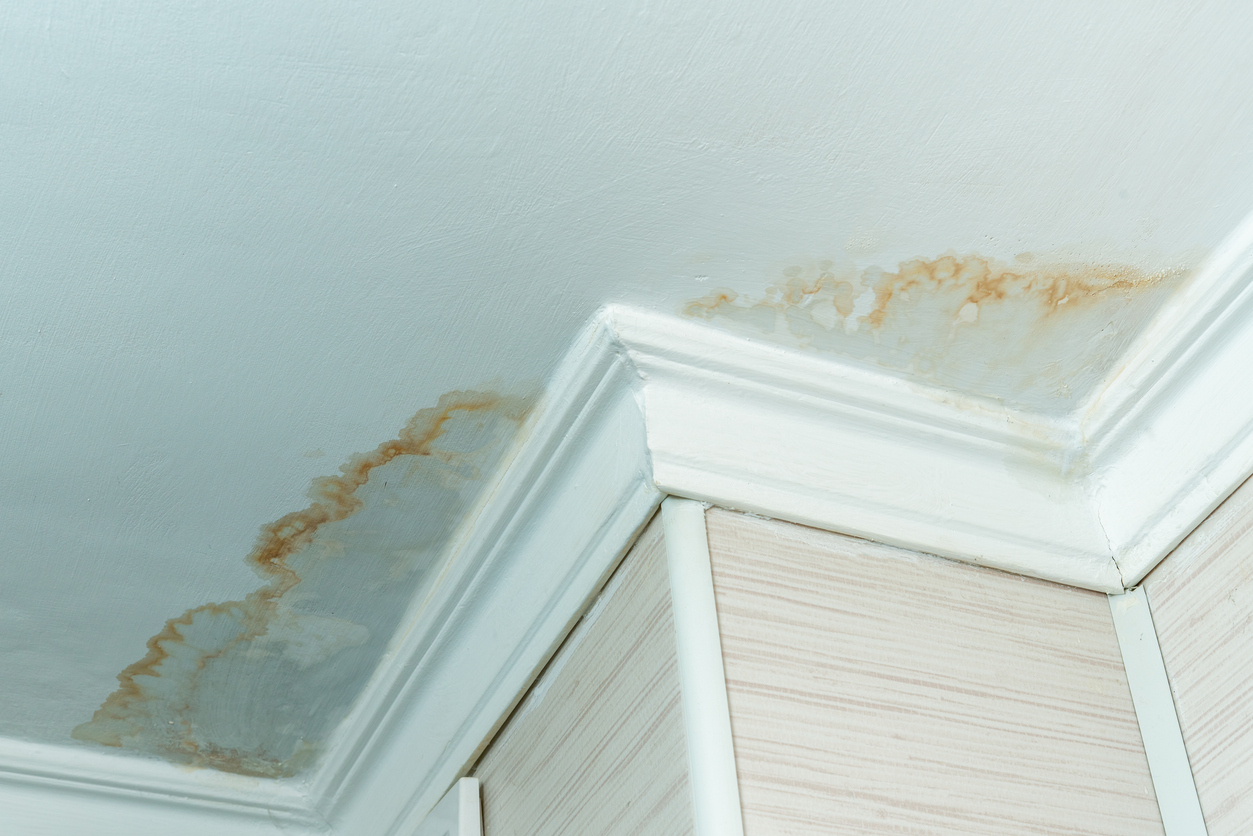
Ceiling Stains Are Common in December—But the Cause Isn’t Always Obvious
If you live in Tacoma or Twin Lakes—especially in older homes near Dash Point, Northshore Parkway, or the hills above Marine View Drive—you may notice a new stain forming on your ceiling after a series of cold, wet December days. It might be faint yellow, a soft brown halo, or a darker patch that slowly spreads.
Most homeowners assume the worst: a roof leak. And in many cases, they’re right. But in the Tacoma–Twin Lakes area, winter condensation can create ceiling stains that look nearly identical to roof damage. Because our region experiences sharp temperature swings, heavy rainfall, high indoor humidity, and cold attic spaces, condensation buildup often mimics the signs of a leak—sometimes so convincingly that even experienced homeowners misdiagnose it.
This post explains how to tell the difference between a true roof leak and condensation-related staining, why this issue is so common in Tacoma and Twin Lakes, and what steps to take when a new stain appears.

Why Ceiling Stains Happen More in Tacoma and Twin Lakes During Winter
The combination of December weather patterns and the local housing stock creates perfect conditions for both leaks and condensation.
Cold Attics + Warm Indoor Air = Condensation
In homes near Twin Lakes and Tacoma’s waterfront slopes, attics can drop to near-freezing temperatures. When warm, humid indoor air escapes into the attic, it condenses on cold surfaces—roof decking, nails, trusses—and eventually drips onto insulation or drywall, creating stain patterns identical to leak damage.
Heavy, Wind-Driven Rain
Tacoma and Twin Lakes receive significant sideways rain during December storms. This can push water under shingles, through flashing, and into vulnerable roof transitions.
Clogged Gutters Overflowing Into the Roofline
Overflowing gutters saturate the soffit and roof edge, allowing water infiltration that shows up as ceiling stains near exterior walls.
Poor Ventilation in Older Homes
Many Tacoma-area attics lack proper airflow. Without ventilation, humidity becomes trapped, causing condensation droplets to form and drip downward.

How to Tell If the Stain Is From Condensation
Some ceiling stains don’t come from leaks at all. Instead, they result from moisture condensing inside the attic and dripping onto insulation or ceiling drywall.
You may be dealing with condensation if:
- The stain appears after a cold snap, not necessarily after rain
- The attic feels damp, clammy, or unusually cold
- You see frost on nails or metal components in the attic
- Insulation is damp at the top surface but dry underneath
- The stain is round, faint, and slow to spread
- Your home feels humid inside (fogged windows, damp walls, musty smell)
- You have bathrooms or kitchens venting into the attic instead of outdoors
Homes in Twin Lakes often experience this because attic insulation tends to settle over time, leaving bare spots that collect condensation.

How to Tell If It’s an Actual Roof Leak
Roof leaks typically present differently, though the symptoms can overlap.
Signs of a leak include:
- Staining that worsens during or immediately after a storm
- A well-defined yellow or brown ring
- Dripping water or bubbling paint
- Soft or sagging drywall
- Water stains near roof valleys, chimneys, or skylights
- Damp insulation beneath the stained area
- Mold starting to form around the stain
In Tacoma and Dash Point, leaks are especially common around older flashing, skylights, and attic vent penetrations.
Why You Should Never Ignore a Ceiling Stain
Whether caused by a roof leak or condensation, moisture above your ceiling can lead to:
- Mold growth within 24–48 hours
- Structural wood rot
- Wet or compacted insulation
- Higher heating bills
- Electrical hazards if water reaches wiring
- Long-term ceiling sagging or collapse
Because Tacoma winters stay damp for months, any moisture trapped in the ceiling dries very slowly—allowing damage to worsen over time.

What Tacoma & Twin Lakes Homeowners Should Do First
Don’t wait for the stain to grow. Take the following steps as soon as you spot it.
Check the Attic (If Safe to Access)
Look for:
- Dripping water
- Damp insulation
- Frost on nails or rafters
- Visible roof sheathing damage
- Moisture trails on wood
This can help distinguish between a leak and condensation.
Monitor Weather Patterns
If the stain worsens during a rainstorm, it’s likely a leak.
If it worsens during cold, dry conditions, it’s likely condensation.
Inspect Bathroom and Kitchen Vents
Ensure vents discharge outside—not into the attic.
Look for Gutter Overflow
If your stain is near exterior walls, gutter issues may be the cause.
Check for Roofing Debris
Winter storms push needles, leaves, and branches under shingles.
When to Call a Professional
If you see any of the following, bring in a restoration expert immediately:
- The stain grows rapidly
- The ceiling feels soft or swollen
- You spot mold or smell a musty odor
- Drips form inside the home
- Attic insulation is saturated
- You cannot determine the source
We specialize in identifying moisture sources in Tacoma, Twin Lakes, Dash Point, and surrounding hill neighborhoods—where attic condensation and winter leaks are most common.
Our services include:
- Moisture detection and mapping
- Roof leak tracing
- Attic and ceiling drying
- Mold remediation
- Structural repairs
- Insurance documentation support
Get Immediate Help:
Home: https://www.911restorationseattle.com/
Water Damage Restoration: https://www.911restorationseattle.com/services/water-damage-restoration/
Mold Removal: https://www.911restorationseattle.com/services/mold-removal-testing/
Contact Us Anytime: https://www.911restorationseattle.com/contact-us/