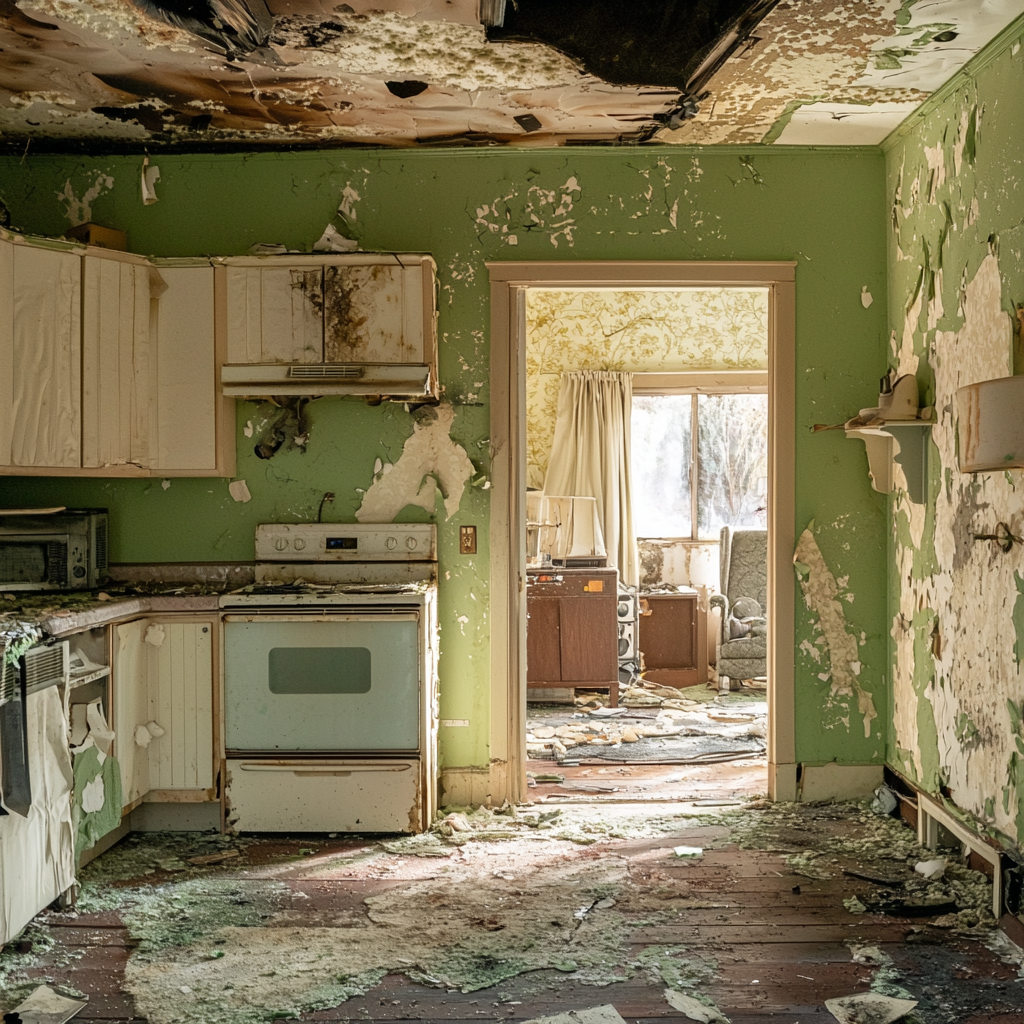
One of the most dangerous parts of water damage is the part homeowners never see.
Not the puddle.
Not the stain.
Not the warped flooring.
The real damage often starts inside the walls.
And in Northeast Tacoma WA — especially in areas like Browns Point, Dash Point, and the bluff-side neighborhoods overlooking Puget Sound — hidden wall moisture spreads faster than most people realize.
Because by the time water becomes visible, it has usually already traveled far beyond the original leak.

Why Water Inside Walls Is So Serious
Walls trap moisture.
Once water enters:
- airflow becomes limited
- evaporation slows dramatically
- moisture stays hidden
That creates the perfect environment for structural deterioration.
And unlike visible flooding, wall damage often continues silently for weeks before homeowners notice the severity.

How Water Gets Inside Walls
In Northeast Tacoma homes, hidden wall moisture commonly comes from:
- roof leaks during wind-driven rain
- plumbing leaks inside wall cavities
- upstairs bathroom overflows
- exterior siding failures
- previous incomplete restoration
The important part is this:
The visible leak location is often NOT where the real damage is concentrated.
Water travels.

Why Northeast Tacoma Homes Are Especially Vulnerable
Local environmental conditions matter more here than in many other areas around Tacoma.
Bluff and Hillside Exposure
Wind-driven rain pushes moisture laterally into structures.
Marine Humidity
Homes near Browns Point and Dash Point dry more slowly because moisture stays in the air longer.
Older Home Construction
Many older Tacoma homes contain:
- aging insulation
- older vapor barriers
- materials that absorb moisture quickly
That combination allows hidden water to spread aggressively inside wall systems.

The “We Thought It Was Fixed” Scenario
This is extremely common.
A homeowner:
- patches a leak
- repaints a stain
- replaces damaged drywall
But no full water damage restoration in Tacoma is performed.
Weeks later:
- odor develops
- paint bubbles
- drywall softens
- damage reappears
Because the internal structure was never fully dried.
Early Signs Water Is Spreading Behind Walls
Before major damage appears, homeowners may notice:
- bubbling paint
- soft drywall
- slight wall discoloration
- musty odor
- trim separating from walls
These signs usually indicate moisture is already spreading inside structural cavities.
And at that stage, the affected area is often larger than expected.
Why Drywall Is Only Part of the Problem
Homeowners often focus on the visible drywall damage.
But behind the wall may be:
- saturated insulation
- wet framing
- electrical exposure
- hidden structural moisture
This is why proper flood cleanup services involve:
- moisture mapping
- thermal imaging
- cavity inspection
- structural drying
Without those steps, the problem remains active inside the wall.
Why Water Damage Behind Walls Escalates Quickly
Once trapped moisture stays inside walls:
- structural wood absorbs water
- drywall loses integrity
- odor intensifies
- damage spreads vertically and horizontally
And because the spread is hidden, homeowners often underestimate how large the restoration will become.
The “Small Leak” That Requires Major Restoration
One of the biggest misconceptions is:
“It was only a small leak.”
But in reality:
- small leaks often last longer
- long-term exposure spreads further
- hidden damage becomes extensive
This is especially true in Northeast Tacoma where moisture dries slowly.
A slow leak over time can cause more structural damage than a sudden visible flood.
When Walls Need to Be Opened
Many homeowners hope walls can simply dry on their own.
Unfortunately, once moisture becomes trapped:
- walls often need controlled openings
- insulation may require removal
- structural drying becomes necessary
This is not cosmetic work.
It’s structural mitigation.
Why Delaying Makes Reconstruction More Likely
Early-stage restoration may only require:
- targeted drying
- limited drywall removal
- localized repairs
Delayed response often leads to:
- multi-room damage
- framing repairs
- insulation tear-outs
- full reconstruction sections
That escalation is what drives costs up dramatically.
Secondary Risks Most Homeowners Never Consider
Water inside walls can also affect:
- electrical wiring
- outlet systems
- HVAC ducting
- structural connectors
Over time, this increases risks associated with fire and smoke damage if electrical systems deteriorate.
Severe water intrusion may also contribute to conditions requiring sewage backup cleanup if drainage systems become compromised.
Why Proper Restoration Requires Verification
A professional restoration process should always include:
- moisture readings
- thermal imaging
- drying verification
- inspection behind affected surfaces
Without verification, rebuilding may happen over active moisture.
That’s one of the main reasons damage “comes back.”
When Northeast Tacoma Homeowners Should Call Immediately
If your home has:
- recurring wall stains
- bubbling paint
- musty odor
- soft drywall
- repeated leaks during rain
water may already be spreading behind the walls.
911 Restoration of Seattle provides water damage restoration in Tacoma, including hidden moisture detection, structural drying, flood cleanup services, and full 24-hour emergency restoration for wall cavity and structural water damage.
The most expensive water damage is usually the part homeowners never see.