If you’ve walked into your home in Twin Lakes this spring and noticed a musty smell that wasn’t there before, you’re not alone.
It usually starts subtly.
A damp smell near the floor.
A heavier feeling in the air.
Maybe worse in the morning or after rain.
And then the question hits:
“Is something wrong under my house?”
In many Twin Lakes homes, the answer is yes — and by the time you smell it, the issue has already been developing for weeks.
This is not a prevention situation.
This is what happens after moisture has already built up in your crawl space — and why homeowners start searching for “mold remediation near me” this time of year.

Why Twin Lakes Crawl Spaces Are Different
Twin Lakes isn’t just another Federal Way neighborhood.
It sits in a low, basin-like area around the golf course, where water collects instead of draining quickly. The soil here is clay-heavy, which means once it gets saturated in winter, it stays wet.
By March and April:
- The ground under homes is still holding moisture
- Crawl spaces trap humid air
- Vapor barriers (often 30–40 years old) start failing
That combination creates the perfect environment for odor to develop.

What That Musty Smell Actually Means
That smell is not just “damp air.”
It’s usually a sign of:
- Moisture trapped in insulation
- Damp wood framing
- Early-stage mold growth
Even if you don’t see visible mold yet, the smell indicates microbial activity has likely already started.
And in many Twin Lakes homes, this begins in the crawl space long before it reaches the living area.
Why It Shows Up in Spring — Not Winter
During winter, everything stays cold and contained.
Homes are closed.
Air doesn’t circulate much.
Moisture builds quietly.
When spring arrives:
- Temperatures rise
- Air starts moving more
- Moisture begins evaporating upward
That movement carries odor into the home.
So while the problem started in January or February, April is when you notice it.
What’s Happening Under the House
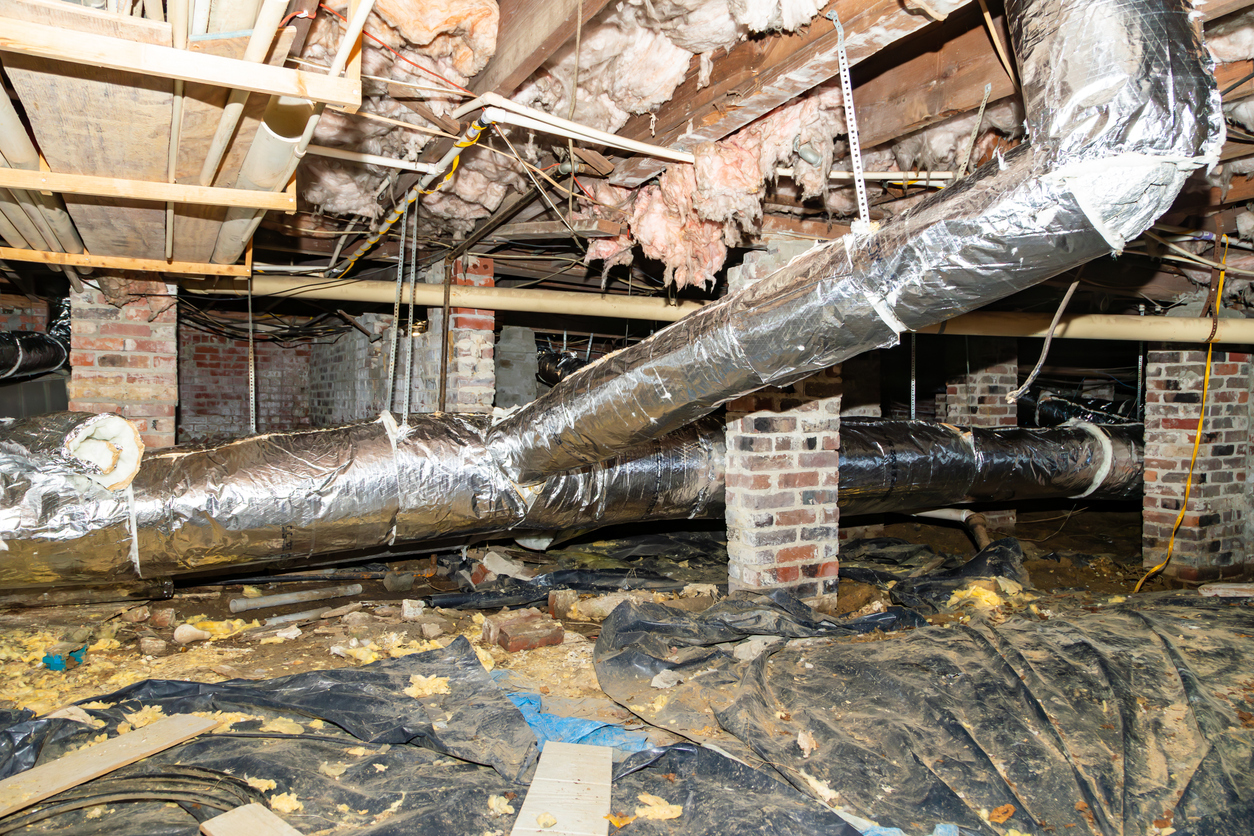
In many Twin Lakes crawl spaces, we find:
- Torn or missing vapor barriers
- Wet insulation hanging from subfloors
- Condensation on wood joists
- Elevated humidity levels
Once moisture sits in that environment long enough, it begins affecting the structure.
And the longer it remains, the more extensive the restoration becomes.
Why This Turns Into a “Mold Remediation Near Me” Situation
Within 24–48 hours of sustained moisture, mold can begin forming.
But in crawl spaces, it often develops slowly and spreads quietly.
By the time homeowners notice the smell:
- Mold may already be present in insulation
- Air quality is affected
- Moisture has spread across multiple areas
This is when simple drying is no longer enough.
Professional mold removal and testing becomes necessary alongside full structural drying.
What Restoration Looks Like After the Smell Appears
Once odor is present, restoration focuses on removing both moisture and contamination.
Typical steps include:
- Crawl space inspection and moisture mapping
- Removal of wet insulation
- Drying of subfloor and framing
- Dehumidification
- Vapor barrier replacement (if needed)
If mold is confirmed, containment and remediation are added to the process.
This is not a surface-level issue — it’s structural.
Why Waiting Makes It Worse
Many homeowners ignore crawl space odors for weeks or months.
That leads to:
- Increased mold growth
- Wood deterioration
- Higher humidity inside the home
- More expensive restoration
What starts as a minor moisture issue becomes a full remediation project.
That’s why early action matters.
Secondary Risks Inside the Home
Crawl space moisture doesn’t stay contained below.
It rises.
That can lead to:
- Warped flooring
- Increased indoor humidity
- Musty odors throughout the house
Over time, moisture can also affect:
- Electrical systems
- HVAC ductwork
Which may increase risks associated with fire and smoke damage if corrosion occurs.
In some cases, saturated soil conditions can also contribute to issues requiring sewage backup cleanup during heavy rainfall.
When Twin Lakes Homeowners Should Call
If your home smells musty and you suspect it’s coming from below, don’t wait.
Especially if you notice:
- Stronger odor after rain
- Damp or cold flooring
- Increased indoor humidity
- Allergy symptoms inside the home
These are signs the issue is already active.
911 Restoration of Seattle provides water damage restoration in Federal Way, including crawl space drying, mold remediation near me, and full 24-hour emergency restoration response.
Once you can smell it, it’s time to act.