December Humidity in Tacoma: Why It Feels Damp Indoors
If you live in Tacoma—whether near Point Defiance, Old Town, or the Redondo-adjacent neighborhoods—you may notice something frustrating every December: the air inside your home feels heavy, muggy, and strangely damp, even when it’s cold outside. You might see fogged windows, condensation around frames, musty odors, or that unmistakable “clammy” feeling on walls and furniture.
This isn’t just seasonal annoyance. Tacoma’s winter climate, with its near-constant moisture and temperature swings, creates perfect indoor humidity traps. And when humidity rises indoors, mold risk climbs sharply—especially in older homes with tight insulation or limited ventilation.
This post breaks down why Tacoma homes get so humid in December, how to tell when humidity has crossed into dangerous territory, and what steps you should take before moisture turns into mold, staining, or structural damage.

What Makes Tacoma Homes Extra Prone to Winter Humidity?
Tacoma experiences some of the highest winter moisture levels in the Puget Sound region. Add holiday activities, closed-up homes, and inconsistent heating, and you get an indoor humidity spike that surprises many homeowners.
The Puget Sound Marine Layer
Tacoma sits right along the Sound, meaning the air outdoors is naturally moisture-rich. Every time you open a door or window, damp air enters and lingers—especially on still, foggy mornings around Redondo and North Tacoma.
Holiday Cooking and Baking
Warm ovens, boiling pots, and slow cookers run more frequently in December. In tightly sealed homes, this moisture has nowhere to go and spreads through the living areas, saturating surfaces and feeding mold spores.
Poor Bathroom and Kitchen Ventilation
Many Tacoma homes built before 1990 have older exhaust fans that simply recirculate moist air or lack ducting that vents properly outdoors. Steamy showers and daily dishwashing pile humidity on top of cold indoor surfaces.
Temperature Swings from Heating Cycles
Turning the heat on and off creates condensation on windows, walls, and ceiling corners. These cold spots become moisture magnets and mold growth zones.

Warning Signs Your Tacoma Home Has a Humidity Problem
Humidity is more than discomfort—it’s a direct contributor to winter mold, drywall deterioration, and discoloration.
Look for these early signs:
- Windows fogging or dripping water
- Persistent damp smell in bedrooms or closets
- Condensation forming on walls or around window trim
- Dark spots forming on ceilings or corners
- Wet or swollen wood trim
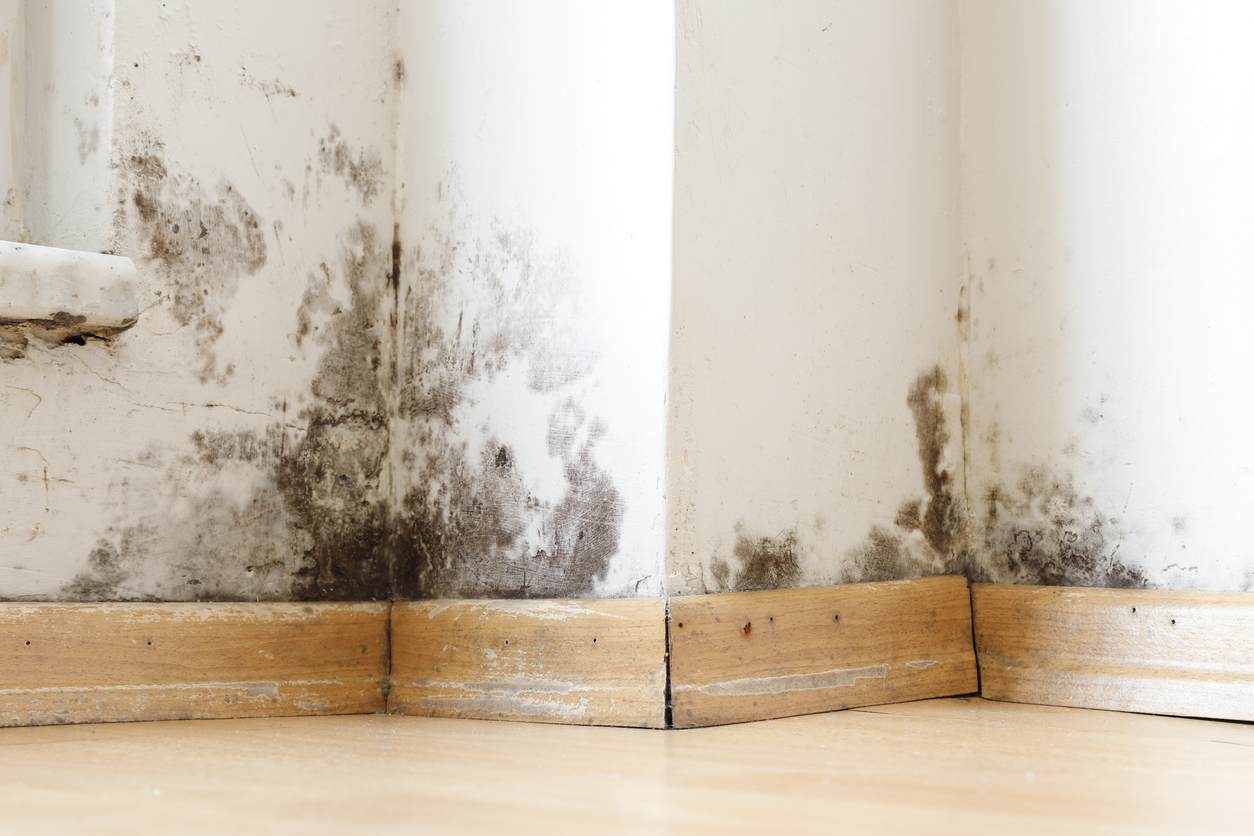
- Visible mold around bathroom grout or baseboards
If you live near Redondo’s low-lying areas, you may notice humidity more intensely due to cold air pooling around the neighborhood.

Why Indoor Humidity Leads to Mold in Tacoma Homes
Moisture + cold surfaces = perfect mold environment. Tacoma’s winter conditions create this mix naturally.
Condensation Inside Wall Cavities
Cold exterior walls meet warm indoor air. Moisture condenses and gets trapped inside drywall, where mold grows unseen.
Attic Moisture and Poor Venting
Warm indoor air rises, hits the frigid attic, turns into condensation, and drips into insulation or ceiling drywall.
Crawl Space Moisture Rising Into Living Areas
Many Tacoma homes have older crawl spaces that absorb ground moisture during December storms. This moisture rises into living spaces, creating a “damp house” effect.

How to Reduce December Humidity in Your Tacoma Home
These strategies help prevent condensation and mold, especially in older Tacoma homes.
Improve Exhaust Ventilation
Ensure kitchen and bathroom fans vent outside—not into attics or wall cavities.
Run a Dehumidifier During Wet Weeks
It’s especially helpful after cold snaps, when condensation peaks.
Maintain Consistent Heating
Keeping indoor temperatures stable reduces condensation and protects drywall.
Address Crawl Space Moisture
Install vapor barriers and ensure proper drainage around the exterior foundation.
Use Weatherstripping and Window Insulation Film
These reduce the amount of cold air hitting indoor humid air.
When Indoor Humidity Becomes an Emergency
If you notice any of the following, your Tacoma home likely has moisture damage:
- Brown or yellow stains on ceilings
- Soft or bubbling drywall
- Visible mold on baseboards or ceiling corners
- Water dripping from windowsills
- A musty odor that persists even after cleaning
These issues worsen rapidly during December storms and fog-heavy mornings.

Professional Moisture and Mold Help for Tacoma Homes
If humidity is causing mold, stains, or wall condensation in your Tacoma home, we offer fast, winter-specific restoration services:
- Moisture mapping and leak detection
- Emergency water damage cleanup
- Mold removal and remediation
- Attic and crawl space drying
- Structural dehumidification
- Preventive winter moisture solutions
Our team specializes in Tacoma neighborhoods where winter humidity is strongest, including Redondo, North End, and the Stadium District.
For immediate help:
Home: https://www.911restorationseattle.com/
Water Damage Restoration: https://www.911restorationseattle.com/services/water-damage-restoration/
Mold Removal: https://www.911restorationseattle.com/services/mold-removal-testing/
Contact Us Anytime: https://www.911restorationseattle.com/contact-us/